Organic farming is a sustainable agricultural system that prioritizes healthy food, soils, plants, and environments by avoiding synthetic fertilizers, pesticides, and genetically modified organisms (GMOs), relying instead on natural processes and resources.
Organic farming is a method of agriculture that emphasizes growing food in harmony with nature. It avoids the use of synthetic chemicals like artificial fertilizers, pesticides, herbicides, and genetically modified organisms (GMOs). Instead, it focuses on natural processes and materials to maintain soil health and ecological balance.
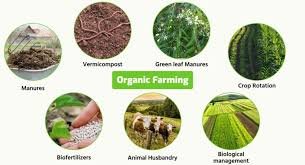
Key Features of Organic Farming:
- Natural Fertilizers: Uses compost, green manure, and animal manure instead of chemical fertilizers.
- Biological Pest Control: Relies on natural predators, crop rotation, and organic-approved pesticides to control pests.
- Crop Rotation and Diversity: Helps maintain soil fertility and reduce disease and pest buildup.
- No GMOs: Organic standards prohibit the use of genetically modified organisms.
- Animal Welfare: Livestock is raised in more natural conditions with access to the outdoors and organic feed.
- Soil and Water Conservation: Practices are designed to protect and enhance soil structure and water resources.
Benefits:
- Promotes biodiversity and healthier ecosystems.
- Reduces chemical residues in food and the environment.
- Often considered better for long-term sustainability.
Challenges:
- Lower yields compared to conventional farming in some cases.
- Higher labor requirements.
- Can be more expensive for consumers and producers.
Would you like a comparison between organic and conventional farming or info on how to start organic farming?
Principles of Organic Farming
The International Federation of Organic Agriculture Movements (IFOAM) outlines four core principles:
- Health: Sustain and enhance the health of soil, plants, animals, and humans.
- Ecology: Work with living ecological systems and cycles.
- Fairness: Build relationships that ensure fairness to the environment and life opportunities.
- Care: Manage in a precautionary and responsible manner to protect current and future generations.
Best 5 Techniques and Practices in Organic Farming
1. Soil Fertility Management
- Composting: Using decomposed organic matter to enrich the soil.
- Green Manuring: Growing plants like legumes and plowing them back into the soil.
- Crop Rotation: Alternating crops to improve soil structure and break pest cycles.
- Cover Cropping: Growing crops that protect and enrich soil between main crops.
2. Pest and Disease Control
- Biological Control: Introducing natural predators (e.g., ladybugs for aphids).
- Botanical Pesticides: Using neem, garlic, or chili-based solutions.
- Crop Diversity: Reducing pest and disease buildup.
- Physical Barriers: Nets, row covers, and traps.
3. Weed Management
- Mulching: Covering soil to suppress weed growth.
- Manual Weeding: Hand removal or using simple tools.
- Flame Weeding: Using controlled fire to eliminate weeds.
4. Water Management
- Efficient irrigation systems like drip irrigation.
- Rainwater harvesting.
- Maintaining soil moisture through organic mulching.
5. Livestock Management
- Animals must be fed organic feed.
- Access to the outdoors is required.
- Preventive health care through natural remedies and good hygiene.
Benefits of Organic Farming
Environmental:
- Protects soil and water from chemical contamination.
- Supports biodiversity.
- Reduces greenhouse gas emissions.
Economic:
- Can command higher market prices.
- Supports sustainable livelihoods for small farmers.
Health:
- No synthetic chemical residues in food.
- Promotes better long-term health for consumers and workers.
Methods of Organic Farming
1. Crop Rotation
- Growing different crops in a planned sequence on the same land.
- Helps prevent pest cycles, improve soil health, and enhance nutrient availability.
Example: Grow legumes (like beans) one season, cereals (like wheat) the next.
2. Green Manuring
- Growing plants (usually legumes) that are plowed back into the soil to add organic nutrients.
- Improves soil fertility, structure, and microbial activity.
Example: Sunhemp or clover grown and then turned into the soil.
3. Composting
- Decomposing organic waste (kitchen waste, farm residue, animal manure) to create nutrient-rich compost.
- Enhances soil structure and provides slow-release nutrients.
Types: Vermicompost (with worms), aerobic compost, pit composting.
4. Biological Pest Control
- Using natural predators, parasites, or pathogens to control pests.
Example: Ladybugs to control aphids, Trichoderma fungi to fight soil diseases.
5. Use of Organic Manures
- Natural fertilizers like cow dung, bone meal, fish meal, neem cake, and farmyard manure.
Benefits: Improve soil fertility, microbial life, and moisture retention.
6. Mulching
- Covering the soil with organic materials (like straw, leaves, or dry grass) to retain moisture, suppress weeds, and improve soil.
Types: Organic (straw), synthetic (plastic – not preferred in strict organic systems).
7. Integrated Organic Farming System (IOFS)
- Combining crops, livestock, poultry, fish, and biogas in a self-sustaining, closed-loop system.
Waste from one part becomes input for another – e.g., cow dung for biogas and compost.
8. Use of Organic Seeds
- Seeds that are non-GMO and grown without chemical treatment.
- Must be sourced from organic farms or certified seed suppliers.
9. Agroforestry
- Integrating trees and shrubs with crops and livestock.
- Helps in biodiversity, shade, nutrient cycling, and erosion control.
10. Natural Pest Repellents
- Preparing homemade or locally sourced botanical extracts to deter pests.
- Examples:
- Neem oil spray for insects
- Garlic-chili spray for caterpillars and beetles